A Little History
About Historic Morris Avenue
Cobblestones and a century and a half of Birmingham history — plus a building with a considerably livelier resume than most antique shops can claim.
Cobblestones and a century and a half of Birmingham history — plus a building with a considerably livelier resume than most antique shops can claim.
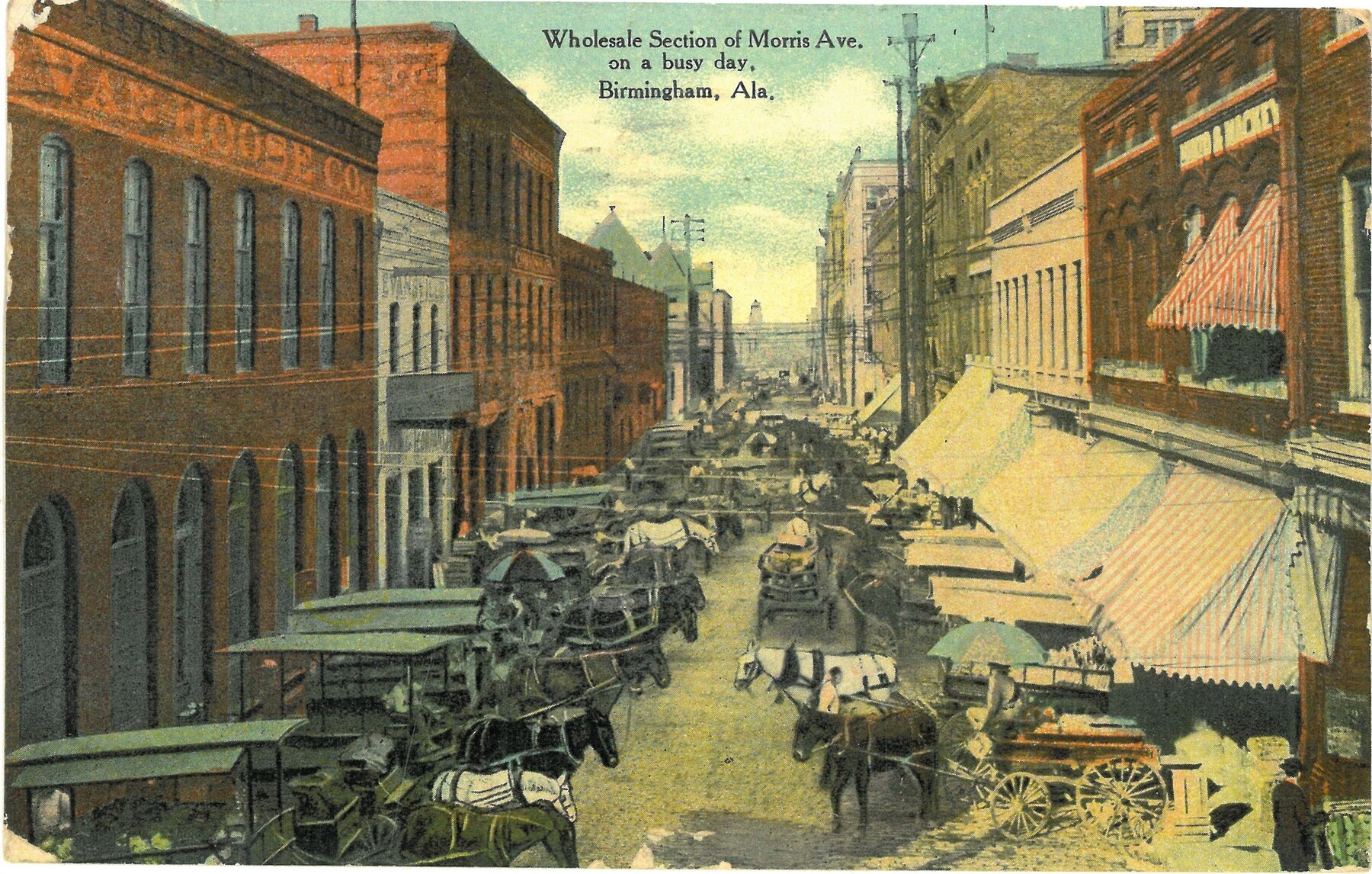
Circa some year we're still trying to verify. History is a draft, not a final answer.
Morris Avenue showed up almost as soon as Birmingham did. Laid out shortly after the city's founding in 1871 and named for banker Josiah Morris, one of the original investors who bet on a muddy patch of land becoming a city, the avenue quickly became Birmingham's main warehouse corridor. Its position next to the railroad depots made it the natural home for the grocers, produce dealers, and jobbers who kept the young "Magic City" fed and supplied — earning it the nickname "Wholesale Row." Those cobblestones under your feet aren't decorative, either; they're Belgian block, hauled over as ship ballast and repurposed to survive decades of loaded freight wagons. They've held up better than most of our knees would.
By the 1950s, trucks and highways had done to Wholesale Row what they did to most railroad-adjacent neighborhoods, and Morris Avenue slid into a couple of quiet, cobwebby decades. Its second act arrived in the early 1970s, when preservationists and a designer named Bob Moody looked at the peeling paint and gaslamp-shaped potential and pitched the city on turning it into a historic entertainment district, in the spirit of New Orleans or the newly opened Underground Atlanta. The gamble worked, more or less: the street was fitted out with gas lighting and its cobblestones, and in April 1973 it was listed on the National Register of Historic Places. For a few loud, sequined years afterward, Morris Avenue was one of the liveliest strips in the city — restaurants, lounges, and dance floors moving into buildings that used to hold sacks of flour.
Long before we were selling other people's cast-off good taste, our own address at 2229 Morris Avenue had already lived several lives — a salvage warehouse, a thrift store, even a photography studio — before it found its true calling in the 1970s as the Show-Boat Lounge, one of the anchor nightspots of the old entertainment district. Owned by two founding members of the local group The Bachelors, the Show-Boat kept the lights low and the crowd loud clear into the early '80s, part of a strip that also included the Gaslite, Diamond Jim's, and the Crazy Horse.
We like to think some of that hospitality soaked into the floorboards. These days the only thing getting shaken here is dust off a good decanter, but we figure a building that once kept Birmingham dancing on a Friday night has earned the right to spend its retirement surrounded by excellent furniture.
Morris Avenue's wilder chapter eventually gave way to a quieter one — lofts, offices, and small businesses moved in over the following decades, and the district settled into the mixed-use neighborhood you're standing in now. We're proud to call this stretch of Birmingham home, surrounded by neighbors who share our love of history, craftsmanship, and a good story — ideally one that still holds up over a drink, even if the Show-Boat isn't the one pouring it anymore.
The Historic Morris Avenue Coalition is a group of local property and business owners — us included — working to preserve and celebrate the stretch of Morris Avenue from 20th to 25th Streets North: advocating for its history, keeping it safe and enjoyable for visitors, and looking after the architecture that makes it worth the walk.
See the history for yourself — and browse the shop while you're at it. We promise not to mention the cobblestones again.
Get Directions